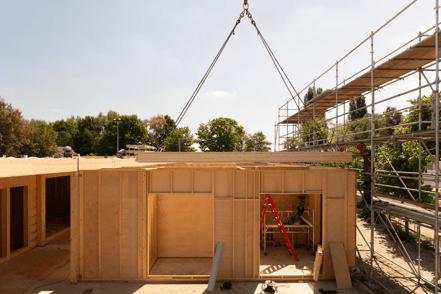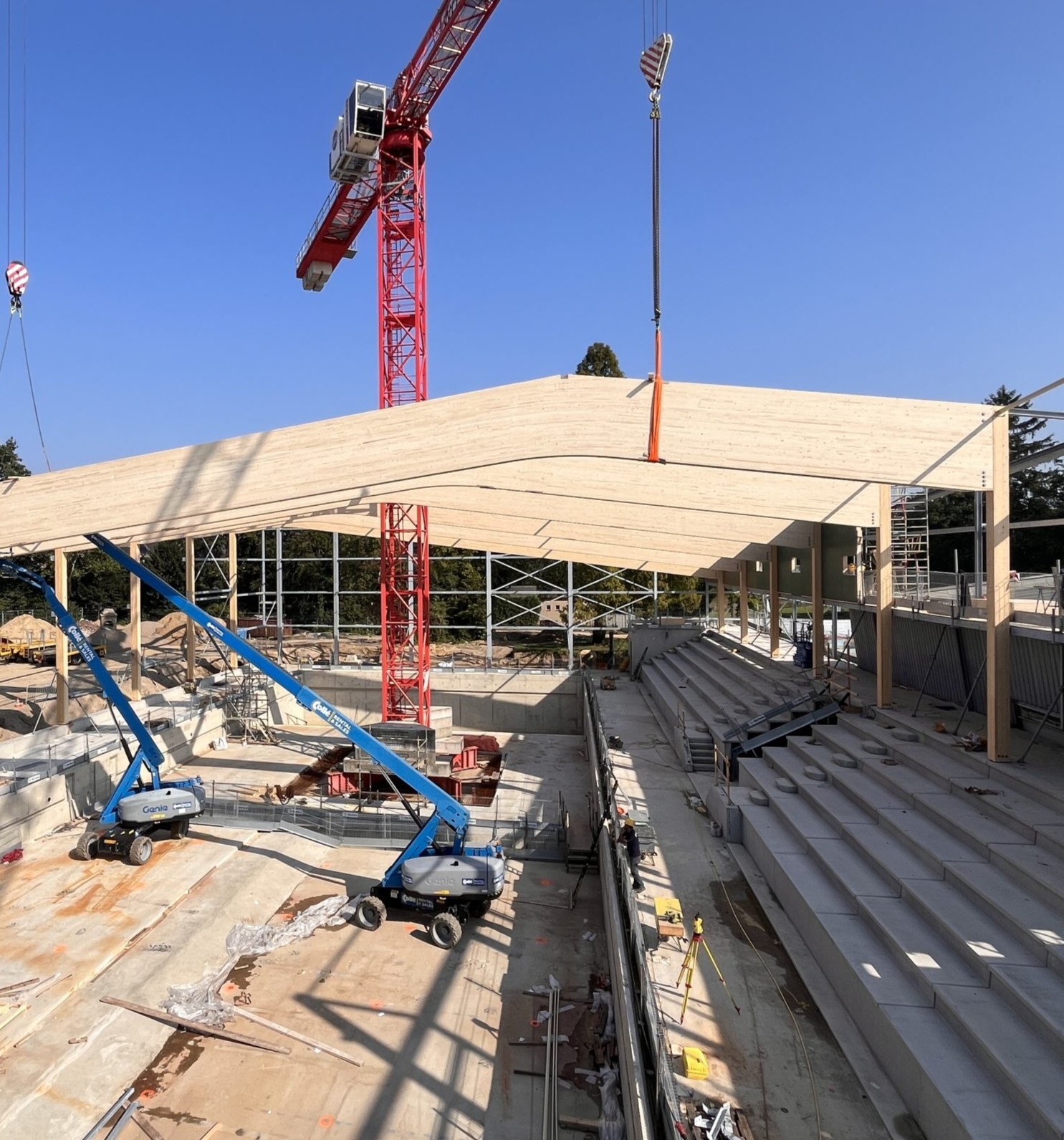
DfMA is becoming increasingly relevant in timber construction because prefabrication, coordination, manufacturing, and assembly need to be considered earlier in the design process.
Why DfMA Is Becoming More Relevant in Timber Construction
DfMA (Design for Manufacturing and Assembly) is becoming an increasingly important topic in modern construction, particularly as projects rely more on prefabrication and off-site production.
The idea is simple: design the building with manufacturing, transport and assembly in mind from the very beginning.
That approach is valuable in any construction project, but it becomes especially important when working with engineered timber. As more elements are manufactured off site, design decisions have a much more direct impact on how a project is produced and delivered.
DfMA helps teams connect those decisions earlier — before they become manufacturing problems, site delays or unnecessary costs.
Why timber changes the design process
Timber construction often depends on prefabricated elements.
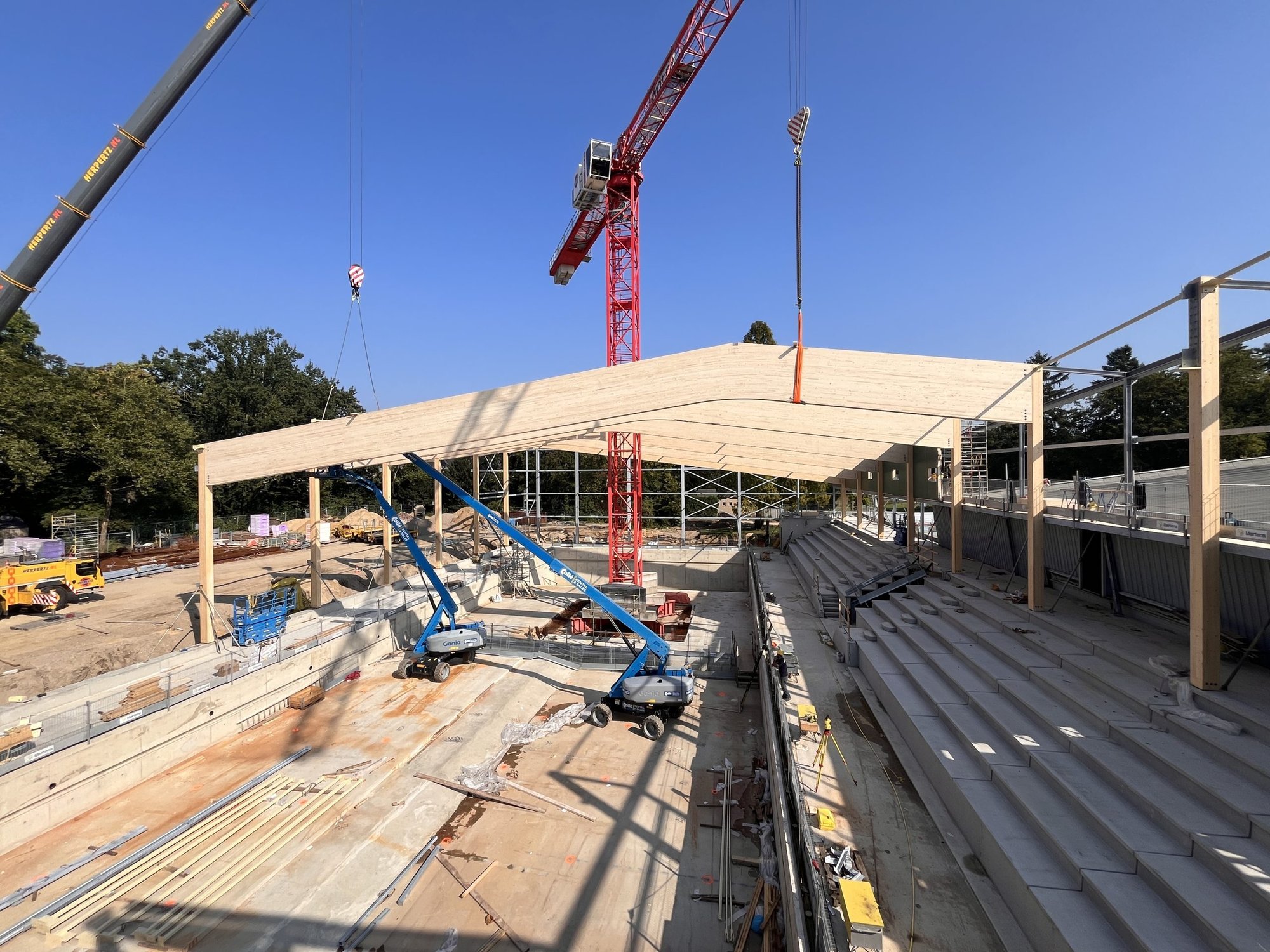
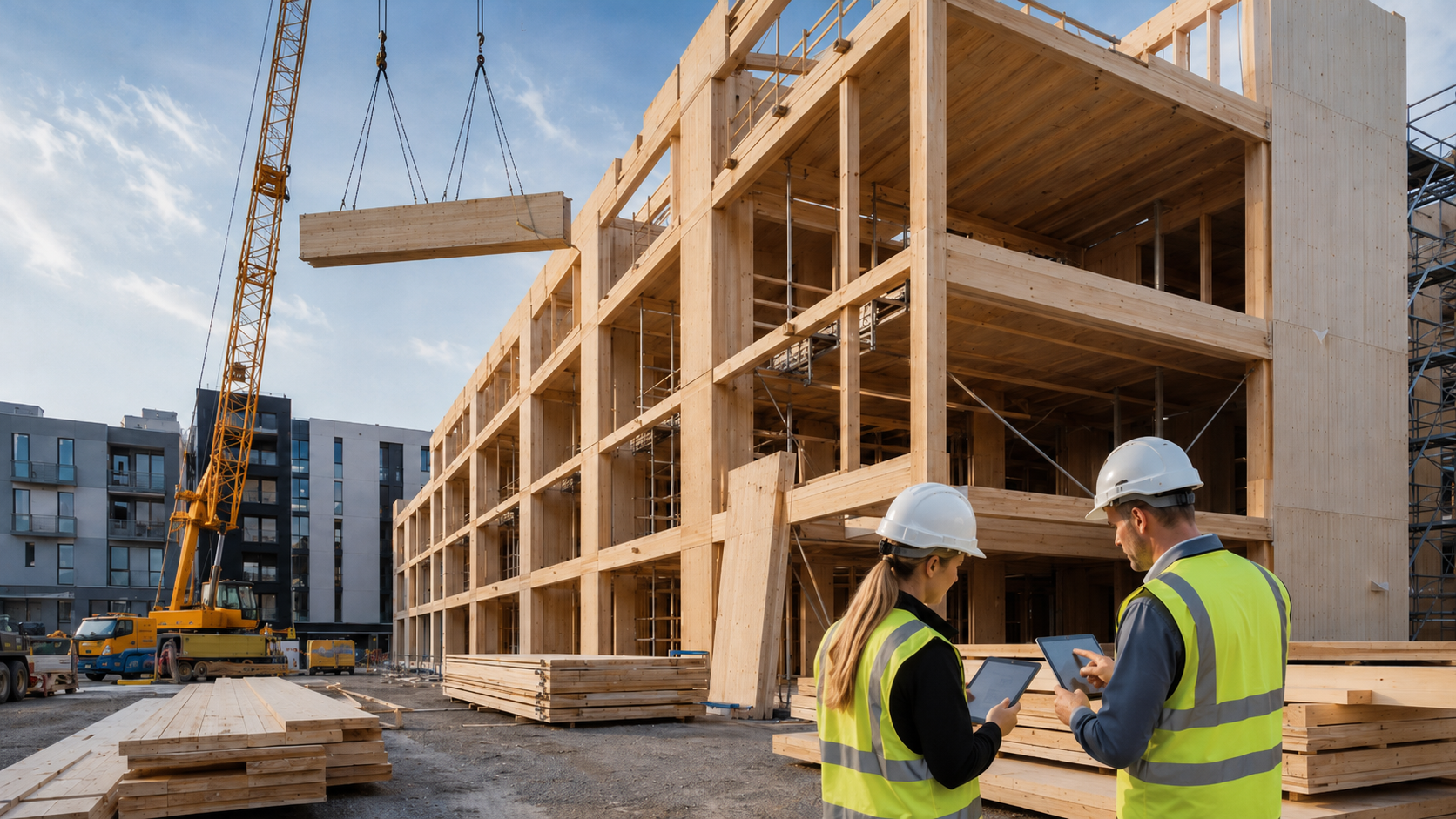
CLT panels, glulam beams, LVL elements, wall cassettes, floor systems and modular components can all be manufactured in factory conditions before arriving on site. This improves quality, shortens installation time and supports more predictable delivery.
The European Commission highlights off-site construction as an important contributor to more resource-efficient construction, while recognising that adoption across Europe still has significant room to grow. [1]
For project teams, this changes more than the construction method—it changes the design process itself.
Once fabrication begins, changes become more difficult and more expensive to accommodate. A missing opening, an unresolved connection or an oversized panel can affect manufacturing, transport and installation.
DfMA helps bring these considerations into the project while there is still time to influence the outcome.
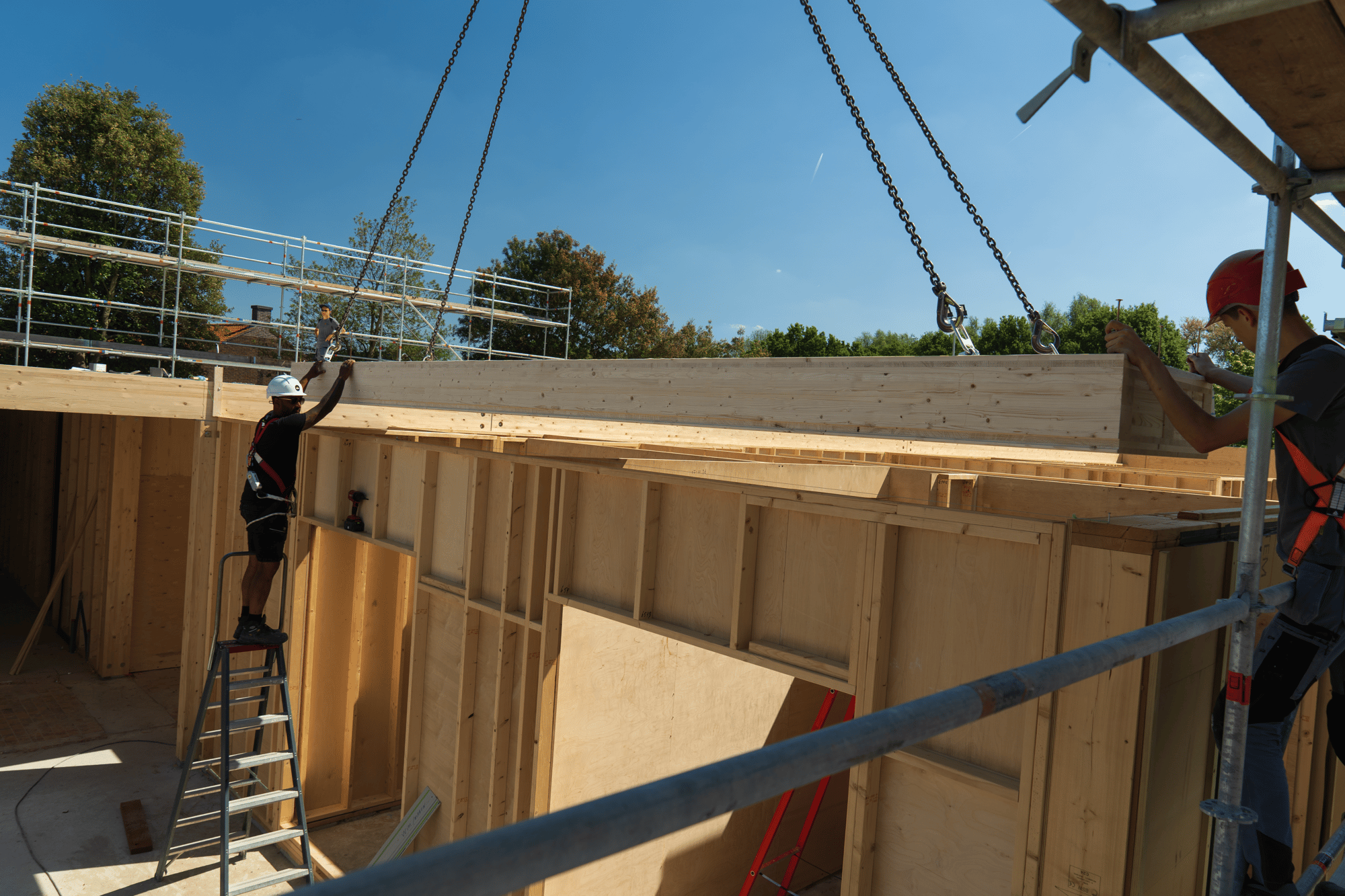
From design intent to delivery
Design: The team defines the geometry, structural role, openings and performance requirements.
Engineering: Connections, tolerances, interfaces and coordination with other disciplines are resolved.
Manufacturing: The element is cut, labelled, checked and prepared for production.
Logistics: Transport routes, lifting strategy and delivery sequence are planned.
Assembly: The element arrives on site in the right order and is installed efficiently.
Each stage depends on the quality of the information created in the previous one. DfMA helps maintain that continuity from design through delivery.
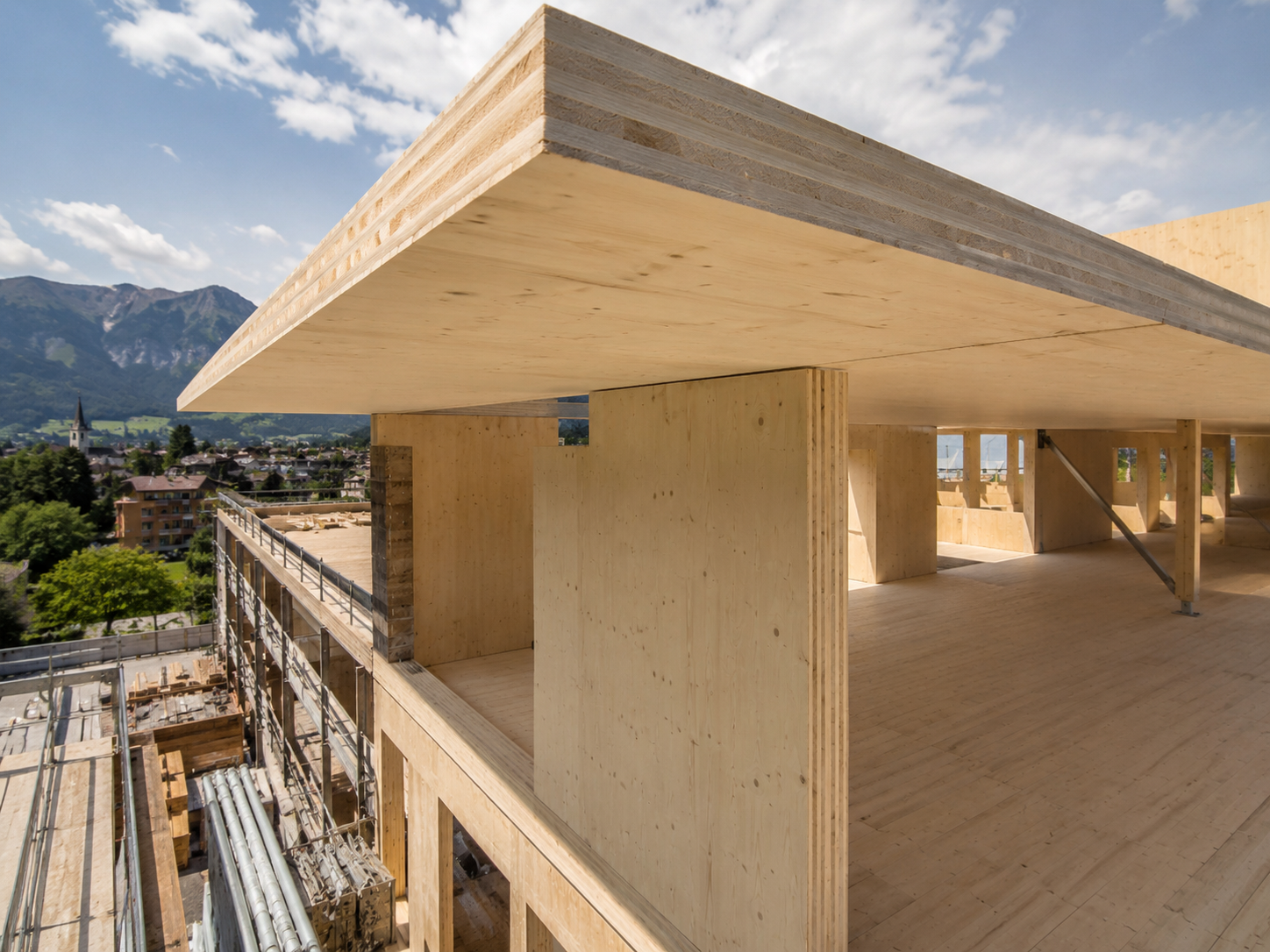
Questions worth answering before fabrication
DfMA begins by asking practical questions while the project is still flexible.
• Is the chosen timber system suitable for prefabrication?
• Can the elements be transported and lifted safely?
• Are openings and penetrations coordinated before production?
• Have structural, fire, acoustic and moisture requirements been aligned?
• Is the required model information available before fabrication starts?
• Does the supply chain support the proposed solution?
• Is the installation sequence realistic for the site conditions?
These questions often reveal potential issues while they are still straightforward to resolve
Why DfMA depends on collaboration
Successful timber projects rarely depend on a single discipline. They depend on how well different specialists work together.
Architects, structural engineers, timber specialists, fabricators, contractors, BIM coordinators, MEP teams and fire consultants all contribute different expertise—and many design decisions affect several of them at the same time.
A connection detail may influence structural performance, fire protection, manufacturing and installation.
A service opening may affect panel strength, acoustic performance and fabrication.
A decision to expose timber may influence fire strategy, moisture protection and finishing requirements.
DfMA provides a framework for resolving these decisions while changes are still relatively easy to make.
The role of digital information
Reliable information is one of the foundations of a successful DfMA workflow.
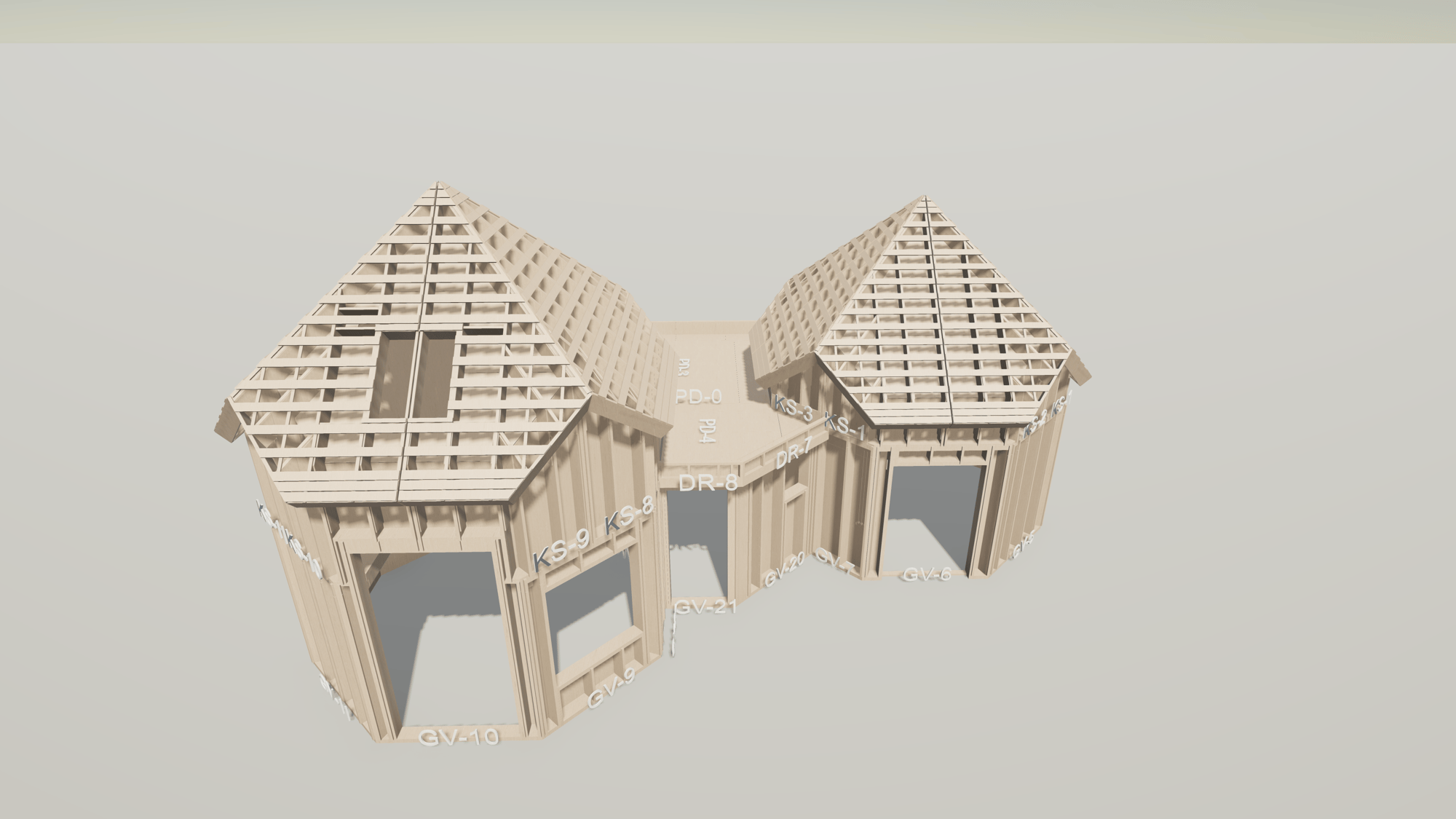
A timber project requires far more than a visual 3D model. Teams need coordinated information that supports manufacturing and assembly: geometry, quantities, openings, interfaces, tolerances, connection locations, element IDs and production data.
Research into BIM-based checking for mass timber projects highlights the importance of structured digital workflows and dedicated model validation before fabrication. [2]
Open standards also play an important role. buildingSMART describes IFC as a vendor-neutral format that enables reliable information exchange and supports workflow automation across different software platforms. [3]
When project information is coordinated, checked and approved before fabrication begins, every stage of the workflow becomes more reliable.
Bringing design and delivery closer together
DfMA is about making better decisions while there is still flexibility to act.
As engineered timber becomes more widely adopted, project success increasingly depends on how well design, engineering, manufacturing and assembly are connected from the beginning.
Teams that establish this connection early can improve coordination, reduce uncertainty and create more predictable project outcomes.
If your organisation is exploring timber construction, understanding DfMA is one of the most practical ways to prepare for the workflows that modern timber projects increasingly require.
A practical way forward
Timber construction creates exciting opportunities, but it rewards preparation. DfMA gives teams a practical way to bring that preparation into the project from the start.
The goal is to make the important questions visible early enough to solve them properly. When design, manufacturing, logistics, and assembly are connected from the beginning, timber projects become more predictable, better coordinated, and easier to deliver with confidence.
To help understand all of these matters, we created Timber Talks: From Trend to Reality in Timber Construction—a practical ebook for construction professionals who want to understand the realities behind successful timber projects and build the confidence to deliver them.
Download the ebook to explore the trends, challenges, myths, DfMA principles, and digital workflows shaping modern timber construction.

Explore the ebook now
Sources & Further reading
[1] European Commission — Offsite construction.
Used to explain the benefits and challenges of off-site construction in Europe, including waste reduction, safer working conditions, and low adoption rates in the EU overall.
URL: https://commission.europa.eu/topics/competitiveness/competitiveness-coordination-tool-projects/offsite-construction_en
(European Commission)
[2] MDPI Buildings — BIM-Based Checking Method for the Mass Timber Industry.
Used to support the point that mass timber’s connection to off-site prefabrication creates specific digital checking and information requirements before production.
URL: https://www.mdpi.com/2075-5309/13/6/1474
(MDPI)
[3] buildingSMART International — Industry Foundation Classes, IFC.
Used to explain IFC as a vendor-neutral standard that supports machine-interpretable information and workflow automation.
URL: https://www.buildingsmart.org/standards/bsi-standards/industry-foundation-classes/
(buildingsmart.org)