Timber construction is gaining global momentum. Explore what is driving this shift and what engineering and construction teams should consider before adopting timber workflows.
Why Timber Construction Is Rising Globally
Timber construction is appearing in more project conversations, design strategies, public-sector plans, and sustainability discussions. For some companies, it starts with a client asking about lower-carbon materials. For others, it comes through a project brief, a housing challenge, a new regulation, or a growing interest in off-site construction.
The interest is real, but the most useful question is no longer simply whether timber is becoming more popular.
A better question is: are construction teams ready to deliver timber projects well?
Timber can definitely support more sustainable and industrialized building methods, but successful adoption depends on much more than material choice. It's essential to ask teams to think earlier, coordinate better, and work with more reliable project information.
A sector under pressure to prove progress
Construction is one of the world’s most important industries, and also one of the hardest to change. UNEP and GlobalABC report that buildings and construction account for around 37% of global emissions and nearly 50% of global material extraction. [1]
In Europe, the construction sector also plays a major economic role. The European Commission states that it provides 18 million direct jobs and contributes about 9% of the EU’s GDP. It is expected to support economic growth while becoming more competitive, resource efficient, and sustainable. [2]
This creates a complex challenge for the industry: teams need to build and renovate more, while also reducing environmental impact, improving productivity, and delivering projects with fewer rework and surprises.
Timber is gaining attention because it sits close to several of these priorities. It can support lower-carbon strategies, it works well with prefabrication, and it encourages a more planned approach to design and delivery.
Carbon is becoming a design conversation
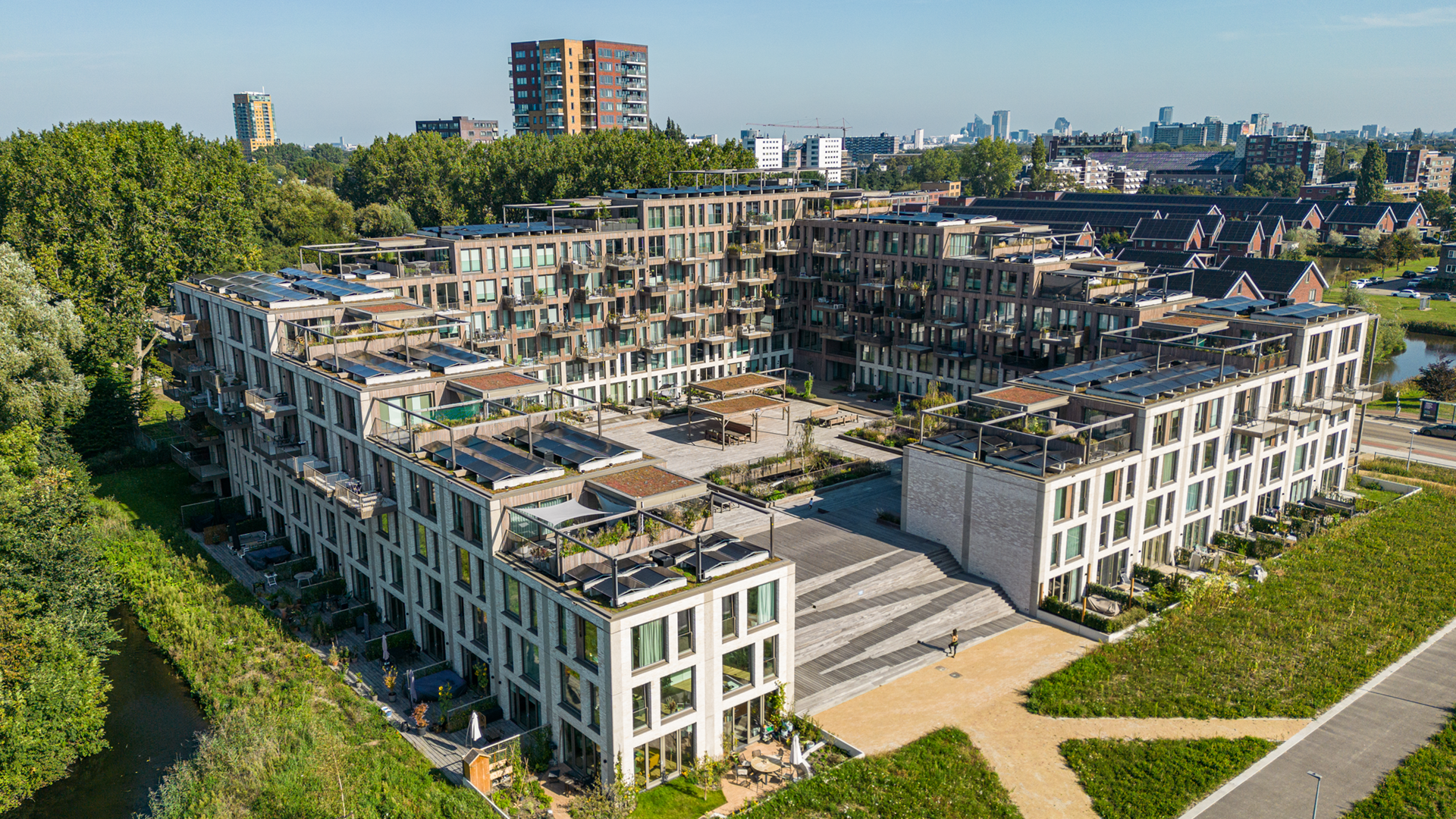
Sustainability is one of the strongest drivers behind timber adoption, especially in Europe. The discussion is becoming more practical and measurable.
The revised Energy Performance of Buildings Directive introduces life-cycle Global Warming Potential into the regulatory terms. From 2028, life-cycle GWP will need to be calculated and disclosed for new buildings over 1,000 m²; from 2030, this will apply to all new buildings. The European Commission explains that this covers both operational emissions and embodied emissions, including construction products, transport, maintenance, demolition, and waste management. [3]
This changes how project teams talk about materials — claims need to be supported by data and structural choices need to be compared across the life cycle. Responsible sourcing, transport, hybrid systems, durability, and end-of-life assumptions all become part of the workflow.
Timber can be a strong option in that context, particularly when it is responsibly sourced and applied where it makes technical and commercial sense. But in the end, credibility comes from evidence (not from the material label alone).
This is especially important when working across disciplines. When structural, architectural, MEP and construction teams can review the same project environment, coordination becomes more transparent and practical.
Timber fits a more planned way of building
A major reason timber is rising is due to its connection to industrialized construction.
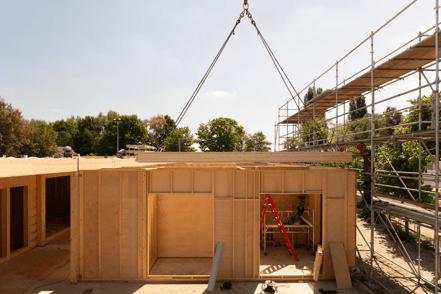
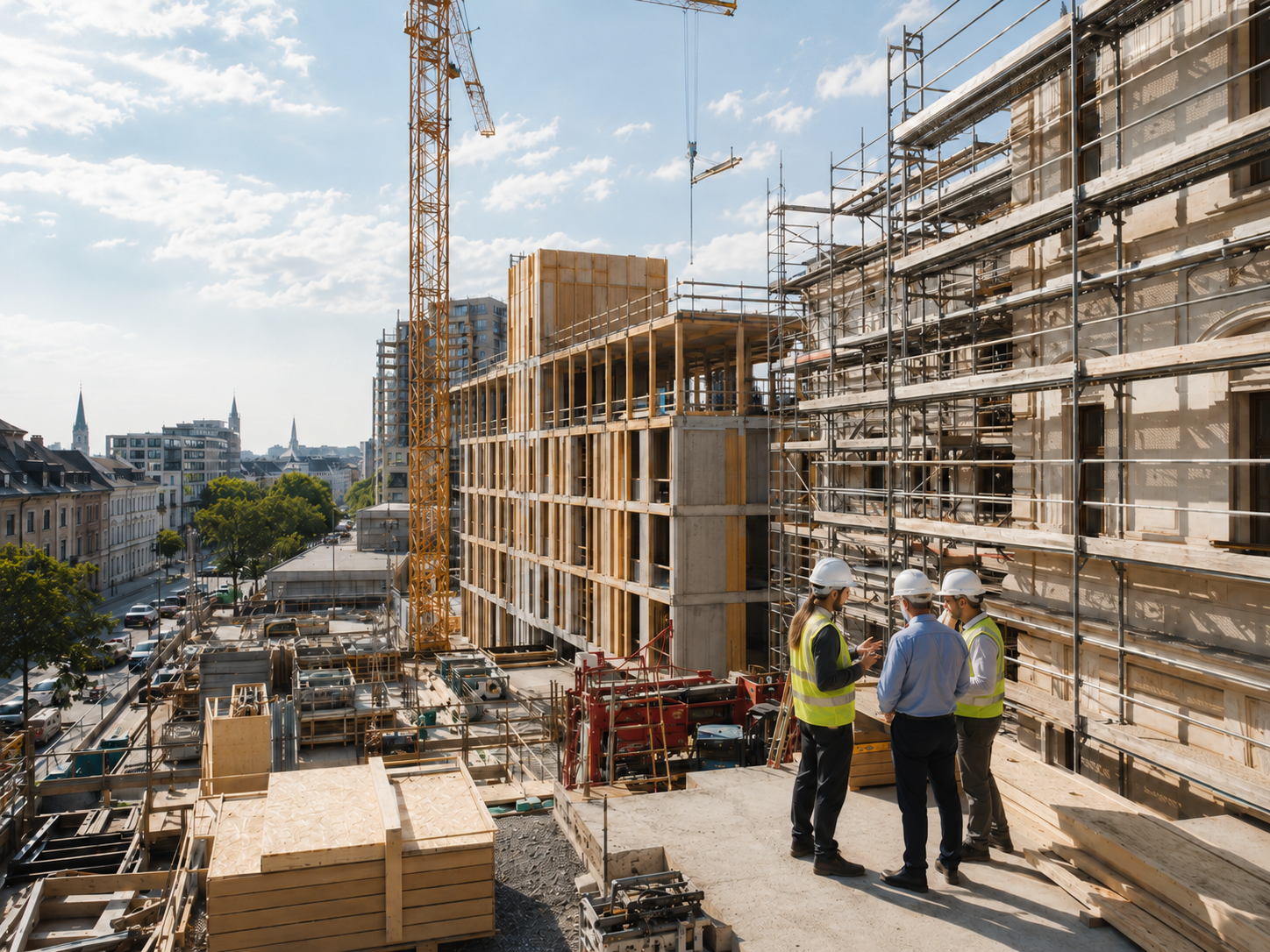
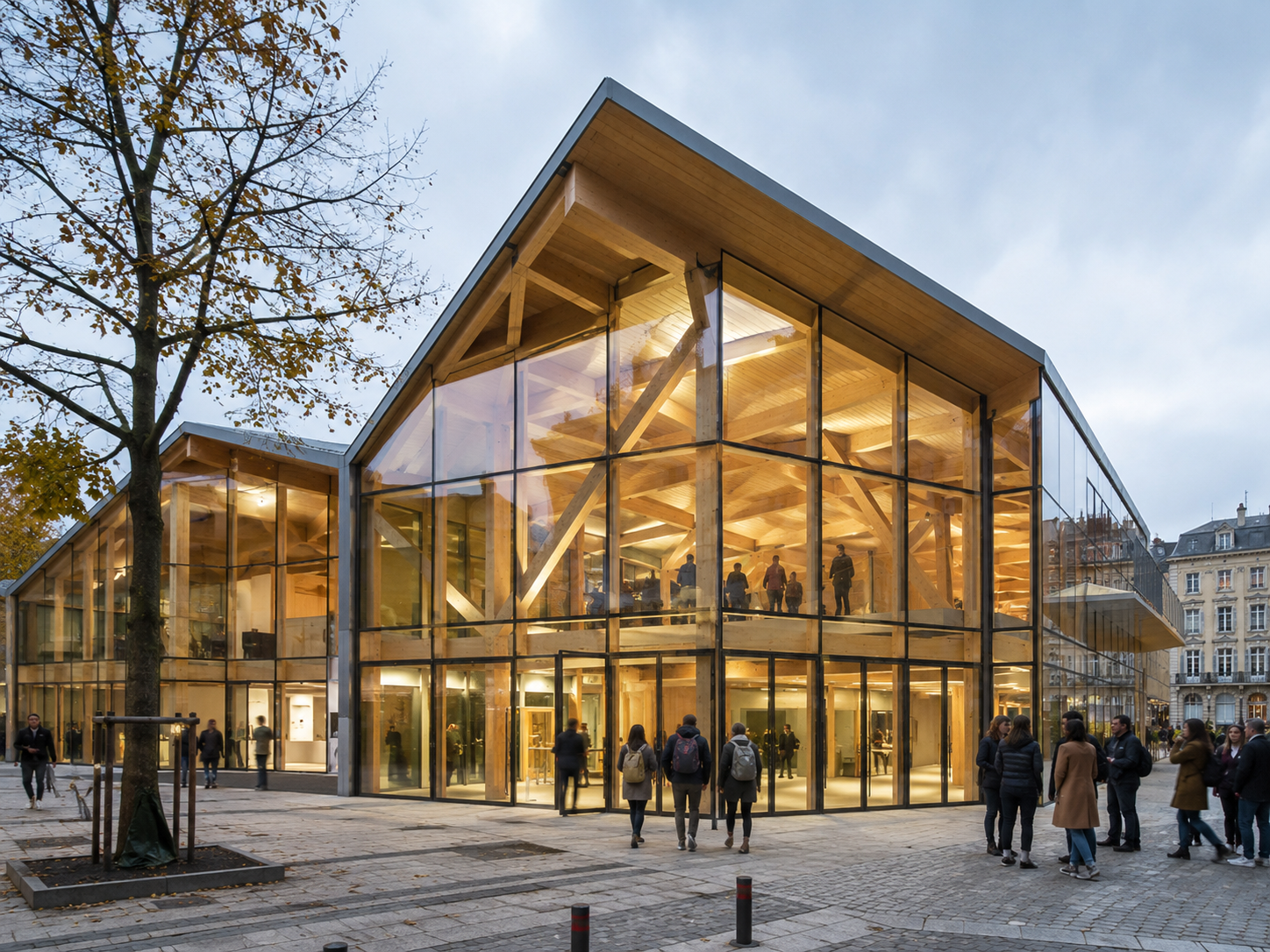
Engineered timber elements are often manufactured off-site, transported to site, and assembled in a defined sequence. That can support faster installation, cleaner sites, and better quality control, while it also changes the way teams need to work.
Decisions that might once have been resolved later in the process often need to be made earlier. Openings, connections, tolerances, fire strategy, acoustic performance, transport, lifting, and assembly sequencing all need attention before fabrication starts.
Therefore, timber becomes particularly relevant for BIM managers, engineers, fabricators, and technical leads. The value of timber depends heavily on coordination, so when the process is clear, timber can help teams build with more predictability. On the contrary, when information is fragmented, small mistakes can quickly become expensive.
For example, the UK’s Timber in Construction Roadmap 2025 reflects this broader shift: it links timber to low-carbon construction, modern methods of construction, housing delivery, innovation, skills, supply-chain confidence, and safer use of timber in buildings. [4]
Visibility is growing faster than readiness
Across Europe, timber is becoming more visible. More clients are asking about it, more public authorities are including it in policy conversations and more design and engineering teams are being exposed to timber projects.
However, adoption is uneven. Some regions such as Benelux and nordic countries already have strong experience with timber frame, CLT, glulam, prefabrication, and hybrid systems, but other markets like Portugal and Spain are still developing technical confidence, supplier capacity, regulatory familiarity, and insurance comfort.
This uneven maturity is important, therefore timber should not be treated as a simple material substitution — a team cannot take a workflow designed around concrete or steel, change the material at a late stage, and expect the same process to work smoothly.
The strongest timber projects usually start with a more prepared conversation:
• Is timber suitable for this building type and site?
• Should the project use timber, hybrid construction, or another system?
• Are fire, acoustics, moisture, and logistics being considered early enough?
• Is the supply chain involved before key decisions are locked?
• Can the BIM workflow support the level of information needed for prefabrication?
These questions help teams move from interest to readiness.
What engineering and construction teams should watch
For structural engineers, timber creates an opportunity to expand design capability: understanding timber means being able to compare structural systems more confidently and advise clients with more clarity.
For BIM managers and technical leads, timber puts information quality under the spotlight: the model, drawings, quantities, openings, interfaces, and revision control all need to be reliable enough to support downstream decisions.
For decision-makers, timber is a capability question: it involves people, workflows, suppliers, software, approvals, and risk management. A successful timber strategy depends on knowing where the organization is today and what needs to improve before projects become more complex.
Consequently, companies should start with education before implementation — before deciding how far to go with timber, teams need a clearer view of the opportunities, limitations, and workflow changes involved.
A useful starting point
Timber construction is rising for good reasons, specially because it responds to important pressures in the construction industry, such as carbon reduction, resource efficiency, industrialized delivery, and the need for more predictable project outcomes.
At the same time, timber asks for preparation, and the teams that benefit most will be the ones that understand the delivery model behind it: earlier coordination, stronger technical evidence, reliable information, and a closer connection between design, fabrication, and assembly.
To better understand these matters, we created Timber Talks: From Trend to Reality in Timber Construction—a practical ebook for construction professionals who want to understand the realities behind successful timber projects and build the confidence to deliver them.
Download the ebook to explore the trends, challenges, myths, DfMA principles, and digital workflows shaping modern timber construction.
Download the free ebook
Sources & Further reading
[1] UNEP / GlobalABC — Global Status Report for Buildings and Construction 2025–2026.
Used for the global context on buildings and construction, including the sector’s share of global GDP, employment, CO₂ emissions, and material extraction.
URL: https://globalabc.org/resources/publications/global-status-report-buildings-and-construction-2025-2026
[2] European Commission — Construction sector.
Used for the European construction sector context, including the figures on direct jobs and contribution to EU GDP.
URL: https://single-market-economy.ec.europa.eu/sectors/construction_en
[3] European Commission — Global warming potential of buildings.
Used for the revised Energy Performance of Buildings Directive context, including the requirement to calculate and disclose life-cycle Global Warming Potential for large new buildings from 2028 and all new buildings from 2030.
URL: https://energy.ec.europa.eu/topics/energy-efficiency/energy-performance-buildings/energy-performance-buildings-directive/global-warming-potential-buildings_en
[4] UK Government — Timber in Construction Roadmap 2025.
Used for the policy context around timber construction, modern methods of construction, whole-life carbon data, skills, supply, fire and durability, insurer confidence, and innovation.
URL: https://www.gov.uk/government/publications/timber-in-construction-roadmap-2025/timber-in-construction-roadmap-2025